

How To Arrive (Hint: Leave The Car)
The best way to arrive in Capitola is on foot. Not because you have to. Because once you start walking, you forget why you were in a hurry in the first place.
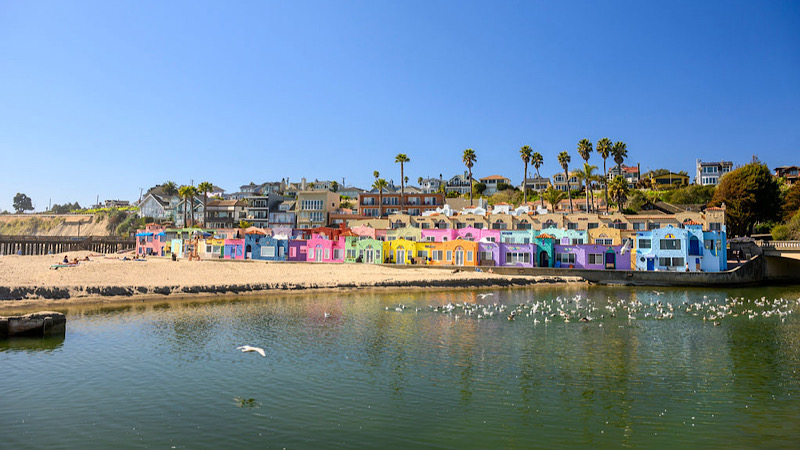
Morning light slips between the buildings, the same candy-colored Venetian Court that has greeted wanderers since 1924. Doors open slowly. Coffee appears in your hands. Someone pauses mid-step outside of Mr. Toots or La Marea to take in the salty air.

Capitola reveals itself like that. Quietly. Kindly. In layers.
“Some places ask for your attention. Capitola rewards it.”
Why March Is Perfect For Wandering (And Why You’re Probably Overdue)
We are over-scheduled. Over-planned. Overstimulated. March brings longer days and a soft shift in energy. The season invites movement without urgency.
This is when wandering matters most. Not rushing toward summer. Not squeezing in a checklist.
The Problem With Most Beach Towns (And Why Capitola Is Different)
Most destinations ask you to optimize your time. Capitola asks you to slow it down.
The tension lives here, between seeing everything and actually feeling something.
“You do not visit Capitola. You settle into it.”
Built for Walking Since 1874: How California’s First Beach Resort Got It Right

Capitola was designed this way on purpose.
As California’s oldest seaside resort, it has always been built for arrival, ease, and walking. From the 1874 tent camps where families set up summer stays along a dirt path, to the railroad passengers who arrived on the Santa Cruz-Watsonville line in 1876, to the 160-room Victorian hotel with its hot saltwater baths and electric streetcar service—this place has never rushed anyone.
When Henry Allen Rispin bought Capitola in 1919, dreaming of creating a second Venice on the California coast, he built his Venetian Court at walking scale. Mediterranean arches. Flat roofs. Stucco in colors that wouldn’t appear for another fifty years—when one owner, inspired by a trip to Europe, painted her unit pink and neighbors followed.
The scale is human. The pace is gentle. Everything is close enough to stumble upon.
And here’s what changes everything: Every shop, store, and restaurant in the Village is locally owned.
Not most of them. All of them.
That matters. It changes how the place feels. You are not passing through brands. You are moving through people’s lives.
“This Village is not curated. It is cared for.”
Meet the Families Who’ve Been Here for Generations
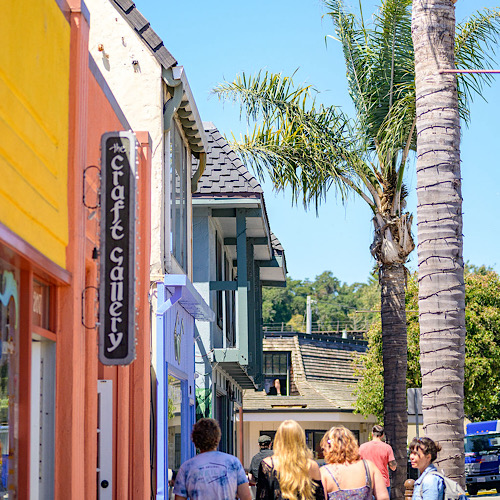
The Craft Gallery has been here since 1969. Carin Hanna opened it when Capitola had lost its beach to harbor construction and the Village sat nearly deserted. She was 25, could crochet a bikini, and decided to stay. She kept the shop open when others closed in winter. Offering free gift wrapping before it was customary. Organized the Begonia Festival in 1972 when everyone said it couldn’t be done.
Fifty-six years later, her daughter Daun runs it with her.
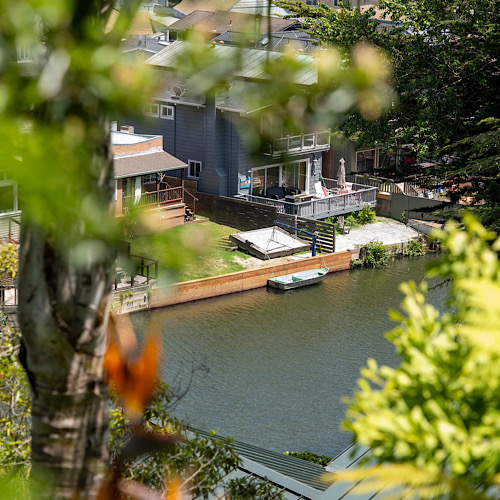
Walk past Shadowbrook Restaurant at dusk. That restaurant perched on the creek bank? It started as a 1920s log cabin, was abandoned and overgrown, then restored by hand over three years in the 1940s. They still run the red cable car down the hillside. They still offer the vintage taxi service. And they’ve been serving the same famous artichoke soup since 1947.
Capitola Beach Company is owned by Jill and Matt Arthur, whose family has been here since the 1880s. Matt grew up surfing these waves. Now the team teaches others. “Keep Capitola Salty” movement donates 10% of proceeds back to the Village—funding water refill stations, beach cleanups, and preservation.
“Local hands shape every corner.”
What You’ll See Before 10 AM (The Village At Its Most Honest)
Walk the Village before ten in the morning.
You’ll see shopkeepers unlocking doors. Someone sweeping a threshold. A window display being adjusted by hand at Phoebe’s, where the owner still designs jewelry featuring local artisans and hand-blown glass. A restaurant preparing quietly.
Nothing is loud yet. Nothing is trying to sell you anything.
This is the Village at its most honest.
“The Village shows you who it is before it asks who you are.”
What You’ll Stumble Upon When You Stop Planning
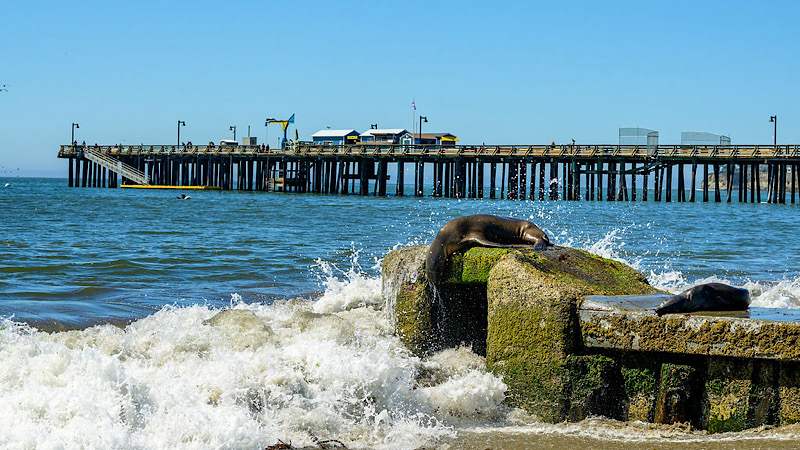
The wharf where timber and produce once shipped out in the 1850s, now rebuilt after winter storms, lined with benches for watching the bay.
The Venetian Court, California’s first condominium development, tucked between Soquel Creek and the beach. Gargoyles smile from doorways. Dolphins swim in carved relief. Architecture that Henry Rispin poured his oil fortune into, then lost in the 1929 crash. The dream survived him.
Shadowbrook’s garden path, winding past waterfalls and lush greenery to a restaurant that’s been “romance in dining” since Truman was president.
The spot where begonia-covered floats once sailed down Soquel Creek every Labor Day weekend for 65 years—until the last begonia grower retired in 2017. Now there’s a sculpture. Four-foot glowing blossoms rising from a sand castle base. Memory made permanent.
“This place works at human speed.”
Why Wandering Works Better Than Planning
Wandering is not passive. It is participation.
When you walk without a plan, you notice details. The way morning light hits the painted stucco. The sound of creek water meeting the ocean. How many windows have hand-selected displays instead of corporate signage.
You stop more often. You talk to people. The woman at Capitola Beach Company who hand-picks every piece of clothing in the boutique. The jeweler who can tell you which local artist made each piece. The baker who still uses real butter, fresh eggs, organic flour.
You linger outside shops that have been run by the same families for three generations. Where customers say, “I came here as a kid with my parents. Now I bring my own children.”
Capitola believes discovery feels better when it’s unforced. That memory sticks when it forms naturally.
“Wandering is how this place introduces itself.”
The Hidden Stories You’ll Only Find on Foot
Somewhere in the Village, there’s a shop owned by someone who organized a festival when they said it couldn’t happen.
A surf instructor who’s been in the water since he could walk.
A gallery showcasing 600 American craftspeople.
A jewelry store where the owner designs rings with stones she hand-selects.
A building that’s been painted pink, turquoise, butter yellow—colors that started as one woman’s whim and became an icon.
“You find more when you stop looking.”
Who Should Visit Capitola Village (Probably You)
This is for the visitor who wants to feel something, not just document it.
For the couple who stays an extra night without planning to.
For the solo traveler who takes the long way back to the beach.
For anyone who remembers when towns had rhythm instead of rush.
For anyone craving ease without emptiness.
How to Experience Capitola Like a Local
Come without an itinerary. Leave your car parked. Follow light, sound, and curiosity.
Let the Village show you what it has always done best.
Notice which buildings house families, not franchises. Which shops smell like the ocean. Which doors have been opened by the same hands for fifty years.
“Built for walking. Built for staying.”
Why Capitola Stays With You
Capitola has been welcoming wanderers since 1874.
The Village doesn’t sell you nostalgia. It lives it.
You arrive. You walk. You stay longer than you planned.
And somehow, that feels like the point.
“The Village does not rush you.”
Plan Your Visit to Capitola Village
Getting There: Capitola Village is located 5 miles south of Santa Cruz on California’s Central Coast. Park once, walk everywhere.
Best Time to Visit: March through May for fewer crowds and perfect wandering weather. Or any time you need to slow down.
Local Tip: Arrive before 10 AM to see the Village wake up. Stay past sunset to see Shadowbrook’s lights reflected on Soquel Creek.
More Information: capitolavillage.com
Travel Blog and Photos Courtesy of Opposite of East